







Is Legacy App Modernization still relevant for enterprises in 2026?
The need for enterprise application modernization remains a critical priority for enterprises. Legacy system constraints continue to hamper scalability, agility, and security for enterprises globally. In 2026, organizations are adopting a fundamentally different approach—one that prioritizes risk minimization through AI-driven automation and hybrid cloud architectures.
This blog explores seven best practices for this risk-minimized approach to app modernization, enabling more controlled outcomes and measurable business impact faster.
How are app modernization initiatives pivoting around AI workloads?
IDC reports that 70% of organizations are using composite AI to address technical debt, security flaws, and data fragmentation, which strengthens alignment between modernization initiatives and business objectives. They predict that by 2027, the massive computational and data demands of AI will compel 80% of organizations to modernize legacy cloud environments by shifting to new platforms specifically designed for AI workloads.
Executives are further accelerating this momentum by prioritizing AI ROI for growth. It therefore becomes imperative to have the right approach to your app modernization initiative.
Seven Best Practices to Risk-Minimized Enterprise App Modernization
1. Don’t touch code before conducting a thorough portfolio and risk assessment
Begin your modernization journey by identifying the applications that need modernization, understanding the business reasons behind the change, and assessing any potential risks. It's crucial to conduct a detailed portfolio analysis, that evaluates:
- Business criticality (revenue impact, customer-facing functions)
- Technical debt (code age, maintainability)
- Security exposure (CVE counts, unpatched dependencies)
- Change frequency (deployment velocity vs. incident rates)
Conduct systematic risk assessments in the areas of operations, finances, security, compliance, and change management. Map each application and align it with the 6Rs framework: rehost, re-platform, refactor, rebuild, replace, or retire. Link options to measurable business outcomes with quantifiable ROI.
2026 Enhancement: According to the Red Hat State of Application Modernization Report, over 78% of large enterprises now use AI or AI-assisted tools for legacy assessment and to support application modernization by identifying patterns, analyzing data, and automating tasks to enhance both their applications and the modernization process itself.
Several platforms are enabling the auto-generation of modernization roadmaps by leveraging multi-agent AI to analyze legacy code and extract business logic.
2. Define Precise, Measurable Modernization Goals
Vague targets like "move to the cloud" exposes the organization to unexpected risks and unnecessary extra work. A more effective strategy is to establish SMART goals that are closely tied to your business capabilities, such as "Reduce payments app hosting costs by 25% within a year," "Lower P1 incidents by 30% while keeping an RPO of under twenty minutes," or "Speed up feature deployment from six weeks to just six days."
To make your scope decisions more effective, think about using risk-reward matrices that focus on business value rather than just technology preferences. Make sure each metric is tied to tangible results—such as reducing time-to-market, meeting compliance standards, enhancing resilience, or elevating the customer experience.
2026 Context: In 2026, AI-powered dashboards can now monitor ROI in real time and compare it against industry benchmarks. This capability enables businesses to adjust their goals dynamically as they modernize. Many enterprises are realizing value more quickly with automated tracking.
3. Choose Architecture Patterns That Reduce Blast Radius
Modernization presents a valuable opportunity to reduce risk at a structural level by improving architecture. Monolithic applications can lead to system-wide failures; modern design patterns help to contain those issues. Consider adopting microservices for decoupling domains, API gateways for maintaining contract stability, and event-driven architectures like Kafka or RabbitMQ to boost asynchronous resilience.
According to the Microservices Architecture Market Report, the microservices market is projected to soar to $13.1 billion by 2033, reflecting a strong commitment from enterprises to this model. By using strangler-fig patterns, facades, and coexistence models, businesses can run both legacy and modern components side by side, facilitating a smooth transition through incremental cutovers validated by shadow traffic, rather than relying on risky big-bang switches.
2026 Trend: In 2026, composable hybrid architectures are set to take center stage, merging the cloud's elasticity with the dependable nature of on-premises solutions and edge computing for AI tasks. Azure's hybrid strengths and GCP's dominance in Kubernetes enable teams to evolve their systems at a pace that suits them, avoiding forced migrations.
4. Plan Cloud, Security, and Compliance as First-Class Workstreams
A significant number of modernization failures are linked to poorly planned cloud and security initiatives. It's crucial to assess cloud providers and landing zones early on—consider aspects like networking (VPCs, peering), IAM hierarchies, encryption (KMS, TLS), backup strategies, and native observability. Make sure you design for scalability, resilience, and FinOps control from day one.
Rather than simply lifting and shifting legacy policies, it's crucial to redesign your security controls for the new environment. Adopting a zero-trust architecture (mTLS, service meshes), along with effective secrets management (HashiCorp Vault, Bitwarden, CyberArk), and implementing shared-responsibility models can help prevent misconfigurations, which account for 70% of breaches after migration.
2026 Shift: AI-driven security platforms are now integrating compliance checks right into modernization pipelines. Several platforms are rolling out enterprise governance frameworks that include automated COBOL refactoring to ensure audit trails are preserved throughout the transformation process.
5. De-Risk Data Migration and Integration Early
Data is often where modernization projects hit a snag. Many enterprises face unexpected outages, which are often the result of incomplete testing and errors during data migration. It's crucial to inventory your data sources, tackle quality issues (duplicates, incompleteness), and review your retention policies and regulatory constraints before starting the migration.
Consider using a big-bang approach for stable datasets when defining migration strategies for each domain. For live transactional systems, change-data-capture (CDC) or dual-write strategies would be ideal. Be sure to include explicit reconciliation queries and rollback snapshots at every cutover step. It’s important to address compatibility issues—such as schema evolution, version mismatches, and third-party dependencies early on, rather than discovering them in the middle of the migration.
2026 Innovation: In 2026, we're seeing Generative AI being deployed to automate data lineage tracking and reconciliation. It’s creating test cases and documentation that help reduce sync errors by up to 90% during pilot programs.
6. Embed CI/CD, Automated Testing, and Observability
Achieving risk-minimized modernization calls for quick feedback and secure releases, rather than relying on heroic manual efforts. It's essential to set up CI/CD pipelines (GitHub Actions, Argo CD, or Azure DevOps) and automated tests for unit, integration, contract, performance, and security. This ensures that every change is validated before it goes live.
Get a complete view of your systems by implementing observability tools like distributed tracing with OpenTelemetry, metrics tracking using Prometheus, and logging through the ELK stack across both your legacy and modern systems. Define your SLOs and error budgets to quickly spot regressions, allowing you to support progressive delivery strategies such as blue-green deployments and canary releases with traffic increments of 5%.
2026 Acceleration: In 2026, many businesses will have already embraced AI for automated testing during their modernization efforts, greatly shortening their QA cycles. Low-code and no-code platforms are taking on more application rebuilds than ever, making modernization easier for everyone while still upholding quality thanks to integrated intelligence.
7. Use Incremental Delivery with Structured Change Management
It's crucial to minimize business disruption while also ensuring technical accuracy. To do this effectively, consider breaking modernization into smaller, two-to-four-week value segments. Set clear entry and exit criteria, use feature flags (LaunchDarkly), and consider dark launches and user pilots compared to one-time cutovers. Each of these increments should provide real business value, not just check boxes on a list.
Focus on building strong communication with stakeholders, providing role-specific training, and establishing continuous feedback loops. Approach modernization as a continuous improvement initiative rather than a single project, and implement dashboards that bring together insights for both technical and business teams.
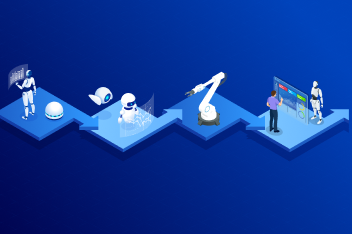
2026 Evolution: Organizations are now experimenting with AI agents to modernize their operations. The standout performers are using these agents at a rate three times higher than their peers. Human-agent teams are working in harmony to deliver results step by step, orchestrating a gradual delivery process where the AI handles routine validations, allowing humans to concentrate on strategic decisions. This collaboration is driving impressive cost reductions across targeted processes.
Conclusion
In conclusion, a risk-minimized approach to modernizing legacy apps is not only important but also essential for businesses managing the rapidly increasing demands of AI. By 2027, many enterprises will need to update their legacy systems to support AI workloads to improve scalability, compliance, and productivity.
At Cambridge Technology, we’ve helped large enterprises and small-to-medium businesses modernize legacy applications and mobility solutions for more than two decades — evolving from client-server systems to cloud-native, AI-driven platforms.
We partner with enterprise leaders to deliver end-to-end transformation, combining 25+ years of proven modernization playbooks with deep engineering expertise. From mainframe refactoring to hybrid cloud and on-premises platforms, we help technology decision-makers like you turn technical debt into a strategic advantage.
Now is the time to accelerate your modernization journey — connect with us to explore how AI-powered transformation can future-proof your business
Schedule a call with our experts.
